Top mobile phones you can't live with

Get paid To Promote at any Location
Showing posts with label rediff. Show all posts

Wednesday, March 23, 2011


A wildfire is spreading through the Middle East. What began with an innocuous vegetable seller being bashed up in a Tunisian street, evolved into a revolution and is now questioning the authority of the leaders who till date were ruling with a firm grip over their countries.

The Jasmine Revolution swept through Tunisia and Egypt, uprooting political foundations. Now, its presence is being felt throughout the Middle East.

Protestors are being met with brute force. Libyan leader Muammar Al-Gaddafi has unleashed the bloodiest crackdown so far against pro-democracy protestors seeking his ouster. Human Rights Watch reports that 173 people have died in Libya alone.
However, every drop of blood spilt on the streets seems to be inspiring the protestors to move ahead. 



Libya
Population: 6.5 million

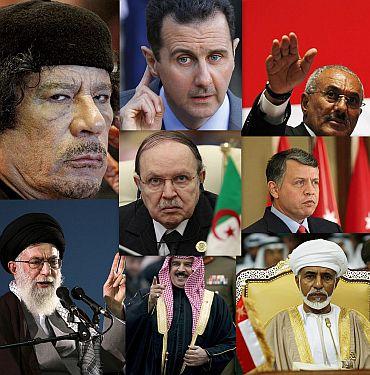
Leader: Colonel Muammar Al Gaddafi

Ruled Since: 1969

Protest Trigger: Frustrations over corruption and incompetence in government housing schemes for poor families has spilt over into protests across the country. The biggest are taking place in Benghazi and al-Bayda, where activists have set up camps.

Protest Outcome: Protests are on amidst reports of Gaddafi's security forces reportedly gunning down at least 100 protestors. 
Gaddafi's regime has also deployed artillery and helicopter gunships against the demonstrators, and thugs armed with hammers and swords attacked families with the intention of crushing the uprising.

              Algeria
Population: 34.6 million

Leader: Abdelaziz Bouteflika

Ruled Since: 1999

Protest Trigger: The success of the Egyptian and Tunisian uprisings fuelled hopes of those seeking change in Algeria. However, media reports say that although many in this conflict-scarred nation fear any prospect of violence after living through a brutal insurgency by Islamist extremists in the 1990s that left an estimated 200,000 dead.

Protest Outcome: Protests are ongoing in Algiers' central square. All roads leading to the square have been blocked and barricades have been set up to prevent protesters from entering. Some protesters still manage to get into the square, while others remain in adjacent streets. Protesters were chanting anti-regime slogans. President Bouteflika has promised to lift a 19-year state of emergency by the end of the month. The state of emergency was put in place to combat the country's two-decade-long Islamic insurgency. 
Tunisia
Population: 10.6 million

Leader: Zine al-Abidine Ben Ali

Ruled Since: 1987-2011

Protest Trigger: Mohamed Bouazizi, a young educated unemployed man, set himself on fire when officials in his town prevented him from selling vegetables on the streets of Sidi Bouzid without permission.

Protest Outcome: Tunisian President Zine al-Abidine Ben Ali stepped down after 23 years in power as protests over economic issues snowballed into rallies against him. A dozen protestors lost their lives.


Egypt

Population:
 80.5 million

Leader: Hosni Mubarak

Ruled Since: 1981-2011

Protest Trigger: The main drivers of the demonstrations against Mubarak were poverty, rising prices, social exclusion, anger over corruption and personal enrichment among the political elite, and a demographic bulge of young people unable to find work. But it was the outcome of the Algerian protests that acted as the catalyst.

Protest Outcome: President Mubarak resigned after nearly 30 years in power and 18 days of relentless pressure from street demonstrations.


Jordan
Population: 6.4 million

Leader: King Abdullah II

Ruled Since: 1999

Protest Trigger: Opposition groups in Jordan were objecting to economic reforms introduced by Prime Minister Samir Rifai ever since he took office in November 2009. They now have been emboldened by demonstrations in other parts of the Arab world and are calling for Rifai's resignation.

Protest Outcome: Protests are ongoing. February 18, dubbed the "Day of Rage", witnessed the largest of protests with over 5,000 protestors taking to the streets in capital Amman and several other cities.
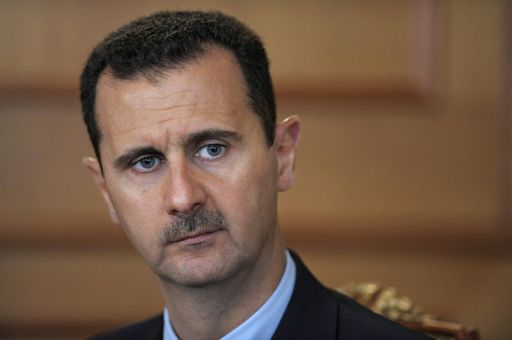
Syria

Population: 22.2 million

Leader: Bashar Al-Assad

Ruled Since: 2000

Protest trigger: It began with a Syrian man and traffic police in the Hari'a neighbourhood in Old Damascus. According to reports and an anonymous video, the officer insulted the man who then returned the insult. When the policeman began beating him with a stick, a scuffle broke out. More police arrived at the scene, drawing the attention of passersby, which soon grew into a crowd. The crowd turned into a protest. They complained about living standards and shouted anti-corruption slogans, calling officials "thieves" and chanting, "Syrian people will not be humiliated." Rest was taken care by social networking sites

Protest Outcome: Though not on a massive scale as in neighbouring states, Global Post quoted Syrian political analyst Rime Allaf, an associate fellow at think-tank Chatham House, said the political climate in Syria appeared to be changing following the events elsewhere in the region.
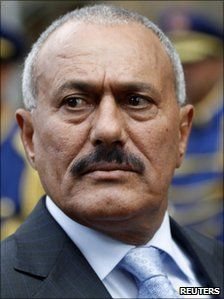
Yemen
Population: 23.5 million

Leader: Ali Abdullah Saleh

Ruled Since: 1994

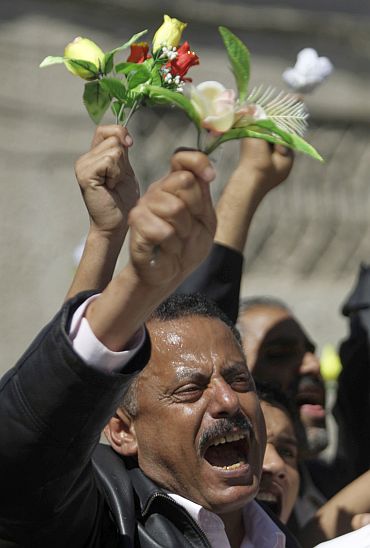
Protest trigger: Demonstrators have denounced what they say is systematic oppression and widespread corruption carried out by President Saleh and his administration. Despite its political unification, Yemen is one of the world's poorest nations. Even before the recent protests, the country was beset by internal conflicts involving southern secessionists, northern rebels and Al Qaeda insurgents.

Protest Outcome: Demonstrations have been gaining momentum in terms of numbers. Several people have been hurt in the weeklong clashes between pro and anti-Saleh factions despite calls by Saleh urging dialogue between his ruling party and the Opposition. 


Oman
Population: 3 million

Leader: Sultan Qaboos bin Said

Ruled Since: 1970

Protest Trigger: The Oman protest is the latest in a wave across the Arab world and Middle East. Protestors are seeking from Qaboos bin Said Al Said, who inherited the post, greater freedoms and greater powers for the elected parliament.

Protest Outcome: The protests have more or less been peaceful in Oman. That's partly because Sultan Qaboos bin Said al Said is revered there. 


Bahrain
Population: 738,000

Leader: Hamad bin Isa Al Khalifa

Ruled Since: 1999

Protest Trigger: The Shiite majority population has been asking for a democratic government in the tiny island, which is ruled by Sunni Muslim rulers. Media reports say that Bahrain's pro-democracy demonstrations represent a sectarian threat to Sunni political interests.

Protest Outcome: Bahrain's main Shia opposition group has rejected King Hamad's offer of national dialogue to end the violent unrest. At least 50 people were wounded on February 18 in capital Manama, following the funerals for four protesters killed the day before when riot police cleared out the protest camp site at Pearl Square. 


Iran
Population: 76.9 million

Leader: Ayatollah Al Khamenei

Ruled Since: 1989

Protest Trigger: The killing of two people in clashes last Monday between security forces and opposition protesters in Tehran. The rallies were the largest to be held by the opposition in more than a year

Protest Outcome: Anti-government protesters gathered throughout parts of Iran on Sunday, most concentrated in the capital Tehran, to mark the deaths of the two men. Opposition Websites and witnesses said that ambulances were driven into the crowds. Security forces, including riot-control units on motorcycles, deployed tear gas to disperse crowds in several places, including near Valiasr Square and Vanak Square. Faezeh Hashemi, a well-known women's rights activist and daughter of former president Ali Akbar Hashemi Rafsanjani, was arrested on Sunday for "making provocative slogans, encouraging the rioters. She was later let off

Friday, January 14, 2011

World's top electricity producers, India the 5th

India faces a power crisis of such magnitude that it can be termed as one of the biggest threats to the nation's economic growth and progress. Today, decades after Independence hundreds of Indian villages still do not have electricity, especially in the rural areas.

Among the cities, with the sole exception of Mumbai, almost all Indian cities suffer daily power cuts, affecting industry, business, education and life in general.
And this, despite the fact that India has the fifth largest electricity-generation capacity in the world. It has an installed capacity of over 152 gigawatts (1 gigawatt is equal to 1 billion watts).

In 2008 (which are the latest figures available), India produced 787,546,450,000 kWh of electricity, which is about 4 per cent of the total power generation in the world. Only four other countries produce more electricity than India.

India is also the world's fifth largest consumer of electricity. In 2007, India consumed 568,000,000 megawatt hours of electricity, which works out to an average of about 51 watts per person.
Comparatively, the per capita electricity consumption in the United States is 1,460 watts, and in China it is 700 watts.

India has amongst the lower per capita power consumption rates in the world. Only Ethiopia, Afghanistan, Congo, Bangladesh, Kenya, Pakistan, Myanmar, Sudan, Cameroon, Nepal, and some other sub-Saharan countries have lower power consumption than India.

Saturday, January 8, 2011

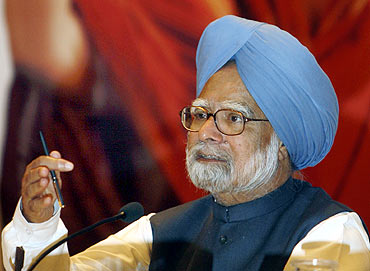
Dr Singh tops Newsweek magazine's list of 10 world leaders

Prime Minister Manmohan Singh tops Newsweek magazine's list of 10 world leaders who have won respect across the globe. He is described as 'the leader other leaders love'.
The magazine says Dr Singh has played a "key role in India's emergence as one of the rising powers of the 21st century."
In an article titled 'The Leader Other Leaders Love', the magazine said the economist-turned-politician engineered the transition of India "from stagnant socialism to a spectacular takeoff in the global economy."
"But it's Singh's unassuming personal style that really inspires awe among his fellow global luminaries, who praise him for being modest, humble, and incorruptible," the magazine said.

Friday, December 31, 2010

9. Our complete lack of civic sense

Think about it. If a day passed without you seeing a single paan-stain, something wouldn't feel right. It would actually bother you. Mainly because we're a nation with no civic sense whatsoever.
Spitting up everywhere, littering the streets with everything imaginable, blowing our noses without handkerchiefs, peeing on any sidewalk we please -- it paints an ugly picture, but we are like that -- you know how it goes by now.
And nowhere in the world are men as obsessed with their privates as here. You'll see them push their hands into their pants in full public view to scratch themselves and nobody will give them a second look. Because, (yech), it's normal.

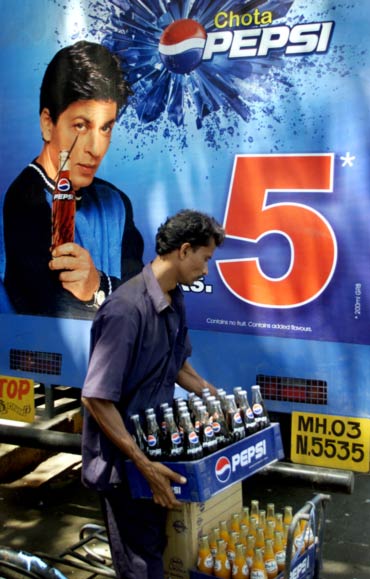
8. Pepsies that are not manufactured by, well, Pepsi


Remember what we said about you being a weenie if you didn't play gallicricket or try ice gola?

We're willing to take that back (well -- half of it anyway), if you haven't been deprived of pepsies as a kid. No, not the aerated drink; the little ice candies that come in an assortment of flavours like orange, pineapple andkala khatta

7. Bargains

Sure, we rave about our state-of-the-art malls and their plush offerings, but the truth is that it's more fun doing rasta-shopping.
Before the term gets you thinking of Bob Marley, you wannabe Amriki, let us clarify that we mean street bargains at roadside stalls and flea markets.
Bargaining runs in our blood. And when someone compliments a purchase, even five years down the line, we remember to say, "You know, he was not coming down only from Rs 500. But finally I got it for Rs 300 what a bargain, isn't it?"

6. Street food

Vada pao, sev puri, momos, dosas -- slurrrp!
Hygiene be damned -- we love our street food and some of us actually prefer it to fancy meals in posh restaurants.
Forget the fact that most of the plates we eat in are merely dipped in a bucket of repeatedly used water by way of washing, or that we find the odd hair in our food now and then. It's worth it!

5. Paanwalas

The paanwala is an honourable Indian institution. And of course, they don't just sell paan -- you'll find they have everything from little toys to tea, magazines and bubblegum.
It's an adda, a hangout for men of all ages, where they convene at various times through the day. At any given point you'll see at least three males hanging about, enjoying a cigarette before heading to work, buying a few mints after lunch or tucking into a paan outside the office.

4. Item songs

Our country thrives on item songs and the -- er -- 'items' that feature in them.
All the curvy Munnis and Sheilas of the film fraternity are enough to have any hot-blooded male on edge in theatres.
And let's face it, while we keep talking about the degradation of 'Western' culture, we're all perfectly aware of erotica in Indian history, right from theKama Sutra to the comely courtesans who were at the beck and call of royalty in centuries gone by.

3. Galli cricket

If you didn't play galli(street) cricket as a child, what can we say? You had a deprived childhood

2. Bullock carts in the middle of metros


Do you bat an eyelid when you see a Mercedes pull up beside a bullock cart at a traffic light in the heart of Mumbai?
Neither do we.
Chalta hai --

1. Saas-bahu soaps


All the women go to bed completely decked out in embroidered saris and wake up without a single hair out of place.
The evil ones inevitably wear coloured contact lenses and heavy makeup, while the good ones are so meek, so downtrodden, so sacrificing that you want to pull your own hair out at their goody-two-shoes antics.
They worship their no-good, drunkard husbands and bullying in-laws and pray before the family idol each day, bathing it in their pure tears as they beseech the Almighty (who may want to keep a bucket handy, considering the diabetic tripe He's forced to hear) to bring about a change in their lives.
No matter how out of sync they are with reality or how offensive they are to modern, independent women with a shred of self-respect, we will continue to watch and enjoy saas-bahu soaps forever.

And so will those dominating wives who don't hesitate to club their hubbies over the head with a frying pan every now and again -- even they're rooting for the hapless bahus and clucking in sympathy while quiet moans emanate from a corner where someone's bid to watch cricket was once again vetoed with a vessel.

Thursday, December 16, 2010

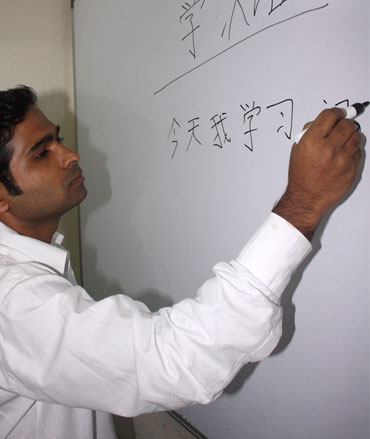
Here's why you should learn Mandarin

There is little doubt that China will dominate the 21st century. As Chinese Premier Wen Jiabao begins his India visit, we find out why learning our neighbour's language may be a sensible thing for all you young folks to do.
The Central Board of Secondary Education is all set to introduce Mandarin Chinese in Class 6 from April 'in view of China emerging as one of the major global economies and Mandarin being spoken by a large population of the world'.
India and China have over 4,000 kilometres of unsettled border between them, but are trading more fiercely than ever.
Last year, China displaced the US as India's largest trading partner.
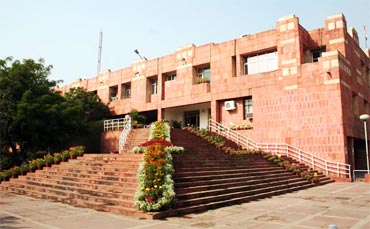
According to Dr B R Deepak, Associate Professor of Chinese, Centre of Chinese and Southeast Asian Studies, Jawaharlal Nehru University in New Delhi, bilateral trade is expected to cross $60 billion this year.
When he says it makes sense for young Indians to learn Mandarin there are good reasons you believe him.
Dr Deepak points out that over 150 Indian companies have invested in China and over 50 Chinese companies including telecom majors Huawei and ZTE have thousands of Indian employees in India.
"The opportunities thrown open by economic and trade relations are immense," he says. "More and more people would like to seize this opportunity to make big or secure their future."
"Academic institutions are also absorbing a great number of Chinese experts," he adds. "Many government as well as private institutions have opened up Chinese courses, the recent one being IIT-Madras."
According to Dr Deepak it is not just the corporate sector that is hunting for Mandarin speakers.
Government agencies -- especially the Union ministries of defence, external affairs and home -- often require expertise in the Chinese language, he points out.
But the largest group of people wanting to learn Mandarin are from the business sector.

Naresh Pratap Singh, director, New Delhi Languages, who started training corporate clients in conversational Mandarin in 2004 says that the Chinese find it difficult to learn English and the only way to do business with them is to 'speak in their language'.
"In the early 2000s Japanese and Korean were the sought after languages. Today it's Chinese. The craze for Chinese grew around 2005 when the business between the two countries grew."
Amit Sakhrani, who runs a language institute in Mumbai, says that of his 30-student strong batch, most are businessmen looking at expanding or those who have expanded their businesses to China.
"China is becoming the fastest growing business hub," he says adding that it also helps that the trade relations between the two countries have been improving for a while now.
Excel Academy, Sakhrani's institute, has been around for eight years. He says the demand for Mandarin has been steadily increasing for the last four years.
The course at Excel is divided into six levels. The first four levels are of two months duration each while the last two levels are of three months duration each. The cost of each course is between Rs 5,000 and Rs 6,000.
Over the last few months Sakhrani has noticed a new trend. "Some time ago, a couple came with their two-year-old asking if we could teach him! They said since Mandarin would be the language everyone will be speaking soon, it made sense for their child to start young."

In Kolkata the city that houses the largest number of Chinese immigrants in India many parents like their young ones to start early.
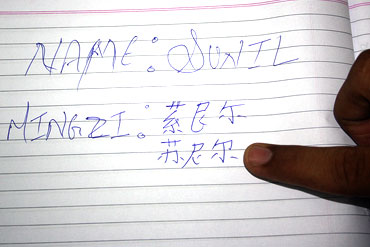
Sunil Kumar, who works for Zhongwen: The School of Chinese Language in Kolkata, says that last year he received over 100 requests from parents who want their children to learn the language. Some of his students are of Chinese origin too.
"The Chinese community in Kolkata speak Cantonese, which is a very different dialect from Mandarin."
"Some of the younger people don't speak Cantonese either. To learn to speak the language of the Chinese, they must learn Mandarin," he says.
While the script can be very daunting, Kumar says learning Mandarin is not very difficult. "It usually takes three years to be fluent in the language. If you are living in China it is even better. People have known to be fluent in as little as a year."
Zhongwen offers a variety of courses for students of the Chinese language -- from a one-month long basic course for tourists (Rs 4,500) to a three-year intensive one (Rs 26,000 per year).
It also offers a joint certificate course in association with the University of Calcutta. The eight-month long course is subsidised and costs Rs 800 per month.

The career prospects after learning Mandarin are many. Naresh Pratap Singh of New Delhi Languages says you could become an independent translator or simply join a firm that is looking at establishing a base in China.
"There are many Indian companies looking to trade with China today and are always on the lookout for people to translate for them."
He adds that while graduation in any stream and a good working knowledge of the language will do just fine, a degree in engineering or business management enhances the prospects manifold.
"If you have an MBA you can easily start off with a package of Rs 3.5 lakh to Rs 4 lakh (Rs 350,000 to Rs 400,000) per year."
The course at New Delhi Languages is divided into three modules of 60 hours each with a batch of not more than 12 students. These models essentially equip you in conversational skills and cost Rs 8,500 each.
According to Amit Sakhrani from Excel Institute in Mumbai, the going rate for translation can range anywhere between Rs 3 and Rs 6 per word.
"Depending on how good you are, you can easily make Rs 30,000 to Rs 50,000 per month," he says.

Dr B R Deepak of JNU says the time has never been better for Chinese language experts.
"Our students have been absorbed by various multinationals like Oracle, HCL, American Express, TCS, Infosys, Huawei, ZTE and many others."
"The pay can be as high as Rs 60,000 per month," he says. "If you have an IT, finance or economics background, it adds to your market value."
Although it isn't a very popular option, teaching Mandarin in departments and centres of Chinese at various Indian universities is something that Dr Deepak says is well worth considering.
"To become a lecturer in any Indian university, you must have a master's degree and should have cleared the National Entrance Test."
The Union Public Service Commission also advertises for translators in various ministries.
A recent advertisement for the Ministry of External Affairs seeks applications for the post of a junior translator. To apply you must have one of the following:
A master's degree in the Chinese language with English as a compulsory or elective subject at the degree level from a recognised university.
Or any bachelor's degree with English as a compulsory/elective subject from a recognised university and a diploma equivalent to interpretership standards in the Chinese language from a recognised university along with three years' experience as a translator/interpreter in the Chinese language to English/Hindi and vice-versa or in teaching the Chinese language.
For those who are seriously inclined towards studying the language, Dr Deepak recommends university courses that introduce you not just to the language but also the culture of China.

Dr B R Deepak points out that the growth in demand for learning Mandarin has seen a lot of Chinese language institutes mushrooming across the country. He tells us of the Chinese language courses offered at the Jawaharlal Nehru University:
"The BA and MA courses at JNU are for three and two years respectively. Being a central university, the course is highly subsidised (about Rs 600 per semester).
There are a couple of entry points to the courses, but the minimum requirements for the BA course are a 10+2 education.
Minimum requirements for the MA course are a BA in Chinese or a three-year equivalent.
Since these courses are in demand, the cut-off for the BA course is usually as high as 90 per cent at the 12th grade.
Prospective students are tested on their general knowledge, mental reasoning and language ability.
If you attend classes regularly there shouldn't be any reason why you cannot be fluent in Mandarin Chinese in three years," he says.
Some others universities/institutes Dr Deepak recommends for learning the language:
  • Bharatiya Vidya Bhavan's Jawaharlal Nehru Academy of Languages offers condensed courses in Chinese. The classes for the first semester are conducted during June-July. Students passing the examination in July can join the second semester in August.
    Bharatiya Vidya Bhavan, Kasturba Gandhi Marg, New Delhi 110001. Tel: 011-23382005/ 23389942.
  • Visva Bharati University, Shantiniketan, West Bengal offers two year MA Courses in Chinese as well as a four-year BA (Honours) Course.
    Visva Bharati University, Santiniketan, Birbhum, West Bengal 731235. Tel: 03463-262751/52/53/54/55/56.
  • University of Delhi offers certificate and diploma and advanced diploma courses in Chinese. Each of these are one-year part-time courses. The minimum requirement for the certificate course is a Senior School Certificate of the CBSE or an equivalent qualification.
    Department of East Asian Studies, University of Delhi, Delhi 110007. Tel: 011-27666675, 27667725.

Thursday, December 2, 2010

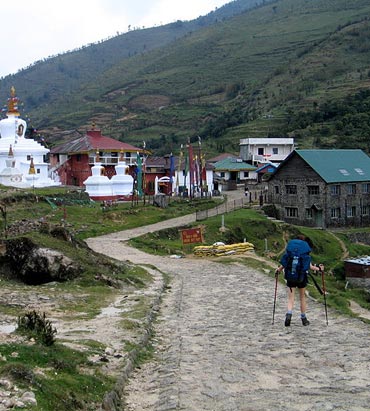
Travel: The lesser known Himalayas


Baishali Mukherjee, Trans World Features The Himalayan foothills are a treasure trove of flora and fauna and locate fascinating indigenous communities. Responsible tourism has tried to introduce visitors to these remote areas without destructing the ambience. Baishali Mukherjee reports.


A jungle camp in a dense forest at the foothills of the Himalayas, forlorn, with sunlight as the only source of illumination. At night, only the flicker of a torch or a lantern shows you the way. Constant cries of crickets and rain in spurts create an atmosphere of mystery and intrigue. This is not a scene from a murder mystery movie but very real. If you want to experience this reel life experience, visit the Jungle camps of Help Tourism situated at the Chilapata Wildlife Sanctuary in North Bengal's Dooars region.
Help Tourism is not just about 'visits' organized for the urban-weary but an overall social and economic development effort in these remote locations at the Himalayan foothills.
Most of the tourism destinations, initiatives and projects in these areas include biodiversity hotspots on the international border are isolated from the mainstream and often breed conflicts because of poverty and ultimately stokes destruction of rich natural resources.


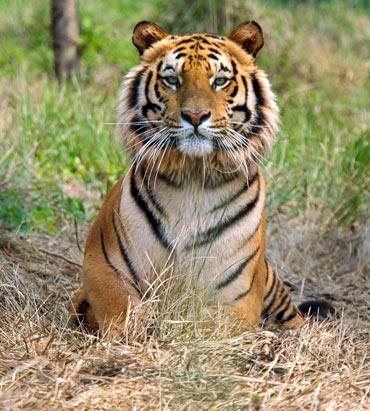
These hotspots are the last habitat for flagship species like the Royal Bengal Tiger


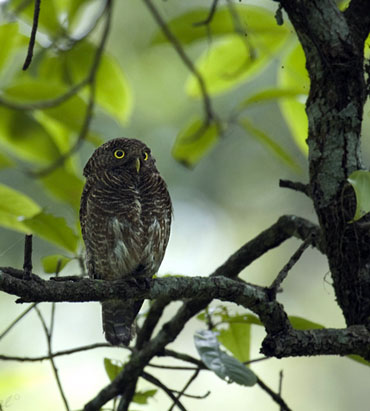
These hotspots are the last habitat for flagship species like the Royal Bengal Tiger, Clouded Leopard, Asiatic Wild Water Buffalo, Red Panda, Golden Langur, Hoolock Gibbon, Asian elephant, one horned Rhinoceros, innumerable species of birds, reptiles and amphibians etc.
Help Tourism has been trying to develop the remote areas of Eastern Himalayas with the motto of sustainable tourism. Asit Biswas, managing director, Help Tourism, believes that linking protected areas and heritage with people's livelihood and giving them ownership through tourism is a first step towards conservation and sustainable development in Eastern Himalayas.
The inhabitants of these areas have rich traditions and unique cultures. Biswas, who is familiar with the place and people of the region, feels that without the cooperation and support of the local people he could never have succeeded in his efforts.
"We have seen that tourism is a tool to open a global window in these neglected areas. The arrival of tourists helps to eradicate the feeling of isolation in the people and the appreciation from visitors for their natural and cultural resources develops a sense of pride in them. The economic benefit and administrative attention brought in by the visitors also balances the rich traditions and conservation initiatives by the local communities," he says.


There are exotic tourist bases in the entire Eastern Himalayas


Today, there are exotic tourist bases in the entire Eastern Himalayas. From Manas Tiger Reserve in Assam,Singalila National Park, Darjeeling, Namdapha Tiger Reserve and Mehao Wildlife Sanctuary in eastern Arunachal Pradesh, Neora Valley National Park, Kalimpong, to Chilapata Wildlife Sanctuary, Dooars, initiatives are taking place to transform these remote areas into attractive tourist destinations.
The developers are not only focused on promoting tourism but have also made efforts to turn poachers and terrorists into protectors of nature and social leaders by changing their attitude and aim for a better life.
This has been possible by engaging them in the entire process of development and conservation.
Nurul Hassan, a local youth who now works as a guide at the Mehao Wildlife Sanctuary, says, "There has been a radical change in the youth force, which now takes pride in conserving their traditions and relate themselves globally; hence the end of isolation. International travellers attract the attention of the local administration which then tries to bring in development activities around the destinations."
At these destinations, there are community associations or organizations which look after the protection of local flora and fauna in the designated Tiger Reserves, National Parks or Wildlife sanctuaries. All that the visitors have to do is to subscribe to a temporary membership or visit the areas with the local community associations and participate with the local members in the several protection activities.

The under-travelled Northeast


Our destinations not only motivate the visitors, but move them to act responsibly in their future travel decisions. The local communities at the sites are an integral part of the Help Tourism initiatives. They are the principal stakeholders in the tourism initiatives and benefit financially, socially and spiritually," informs Biswas.
Meenakshi Subramaniam, a tourist from Kerala, corroborates: "I have travelled alone in some of the most remote parts of the Himalayas using Help Tourism. The whole philosophy of holistic and community beneficial tourism is epitomised by the tours offered."
She has visited Manas, an important tiger habitat in lower Assam, Kaziranga as well as Dibru Saikowa/ Mishmi Hills in the North East, all of which have several local and indigenous tribes and communities. "Every community member I have met through my travels has been friendly and helpful," she enthuses.
Mikey Leung, a travel writer, says: "By taking tourism and its benefits to some of the most vulnerable and least understood destinations our planet has to offer, particularly the under-travelled regions of Northeast India, these organizations do what few other companies are willing to do: to put tourism profit and social development on the same agenda."

                                                                  Spiti: The Middle Land


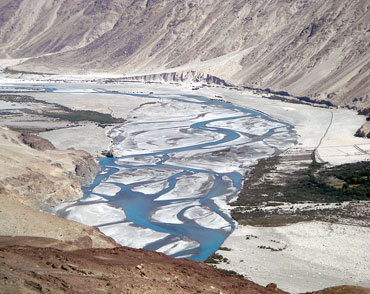
Spiti Valley, a desert mountain valley in Himachal Pradesh, is another less explored tourist destination. Located between Tibet and India, Spiti is often called "The Middle Land".
Nestled in the trans-Himalayan range, Spiti is a high altitude desert region with an arid landscape, scarce vegetation and a six- month-long cold winter (temperatures dip to 30 degree centigrade) allowing cultivation of only one crop a year. Spread over more than 7,000 sq km, Spiti gets isolated during the winter due to thick layers of snow.
Promoting this less known treasure of nature is an initiative by Ishita Khanna and Sunil Chouhan who have named their initiative 'Spiti Ecosphere'. It is a collaborative effort of the local community of Spiti and professionals from diverse backgrounds.
Ecosphere aims at the sustainable development of the Spiti valley by linking economic empowerment, conservation and development. Says Khanna, "Ecosphere works on synergizing the multitude of livelihoods available to the local community. On one hand, it reduces over-dependence on one particular livelihood and on the other, ensures the conservation of the region's natural and cultural diversity."

The magnificent Himalayas


Adds co-founder Chouhan, "In tandem with its core philosophy, Ecosphere has focused most of its efforts on developing options that tap the local surpluses and unique attributes of Spiti. One such surplus identified was Sea Buckthorn (a wild berry with high medicinal value). The other high potential livelihood avenue that emerged was eco-tourism."
Moreover, by developing markets for indigenous crops such as barley and black peas, Ecosphere is attempting to promote and thereby revive the cultivation of indigenous crops which are more suitable to the area's geo-climatic conditions as well as protecting the organic practices of the region.
Rachel Parry, a European tourist who visited Spiti, agrees: "My time spent in Spiti Valley working with Ecosphere was not only extremely rewarding but also a huge personal achievement. I met incredible people and visited some breathtaking places. I couldn't believe the enthusiasm the monks and masons had, and their willingness to teach and work with us, even with the language barrier." She also gained some 'added extras' "which I personally had not expected - friendship, local knowledge, guidance and chocolates!"
The magnificent Himalayas have enchanted and fascinated travellers from all over the world for ages. Today, promotion of the less explored areas at its foothills has only added to its enchantment.


Monday, October 11, 2010

The story behind China's growth numbers

Much newsprint has been dispensed recently discussing China racing past Japan to become the world's second-largest economy.
The second quarter of 2010 saw China's gross domestic product standing at $1.34 trillion and Japan's at $1.29 trillion.
But what does this development mean for Asia and the world?
The recent numbers simply mark the completion of a trajectory that started taking shape over 15 years ago.
It is not a one-off development that is likely to be reversed anytime soon.


In terms of purchasing power parity, which takes into account the goods and services a country's currency actually buys at home, China had surpassed Japan as far back as 1995.
Back in 1995, Japan was already beginning to lose its pre-eminent position in the manufacturing world -- a trend it never quite managed to reverse.
However, at that time the Chinese economy was driven overwhelmingly by price-competitive exports, which allowed Japan to continue to dominate the high value-added manufacturing sector.
Today, though low-cost exports continue to anchor China's manufacturing sector, Chinese companies are steadily moving up the value chain.
China is now beginning to strike at the heart of Japan's competitive advantage, namely, high-end manufacturing.


The 2005 acquisition of IBM's PC Company Division by Lenovo, for example, heralded China onto the world's PC stage.
Even in automobile manufacturing, traditionally the stronghold of the Japanese (Toyota is still the No. 1 automaker in the world), Chinese players like BYD Auto are positioning themselves to be the leading players in what is largely expected to be the next wave for the auto industry -- hybrid and environment-friendly vehicles.
Established in 2003, by 2008 BYD Auto was selling the world's first mass-produced plug-in hybrid vehicle -- the same year that Warren Buffett spent $230 million to buy a 10 per cent stake in the company.


BYD is already exporting cars to Africa, South America and West Asia and has plans to enter the European, Israeli and US markets.
A planned joint venture with Daimler will focus on the development of up-market, BYD-branded sedans.
Companies like BYD have been powering growth of the Chinese economy to bring it to its current position.
Even so, the argument is often made that China's per capita GDP still lags considerably behind industrialised countries and significant intra-regional differences in per capita GDP remain in China.


This only highlights the further potential for growth in China, as well as the risks if this growth is not balanced and equitable.
What is arguably the most significant aspect of China's growth is that it has percolated down to the basic roti, kapda aur makaan level -- certainly more than in many other developing countries.
In the last 30 years, the percentage of China's population living on less than $2 a day has reduced from over 95 per cent to about 35 per cent.
Over 90 per cent of rural households in China have electricity compared to 50 per cent in India.
China's infant mortality is half of India's and average life expectancy is 10 years higher.


China's grain production stands at double that of India and the countries' population levels are comparable.
The ground that China has covered in terms of poverty reduction and provision of basic needs in a period of 30 years is astonishing.
Another unique feature of China's growth story is the role of women. China today has one of the highest participation rates of women in the workforce and an exceptionally high percentage of these women rise to senior positions in their jobs.
China's numbers on this front are not only higher than other developing countries but are also significantly higher than the US.
Whether women's involvement in the workforce is driven by China's one-child policy or is a fallout of its communist legacy, the outcome of gender-inclusive growth is a desirable one.


In fact, one of the biggest challenges that Japan faces today is how to draw women back to the workplace.
In the light of a strict immigration regulation, drawing Japanese women into the workforce is one of the last resorts for Japan to expand its working population and offset a declining birth rate and support the growing cohorts of retirees.
China's rapid growth has also resulted in growing political might and ambition.
This is natural since the UK, Germany, Japan and the US have all, at some point of time in their history, used their economic prowess to establish a political presence in the world.
This is no justification of the trend but an acknowledgement of its inevitability.
China today provides easy target practice for the rest of the world.


Politicians from Australia to the US have been quick to attribute their falling economic fortunes to China's trade malpractices.
Have those countries ever stopped to think about what their economies might look like today if China did not exist?
Though there may be much ambiguity the world over about China's emergence, the world needs China.
A manufacturing powerhouse, China's low-cost exports today are underpinning worldwide consumer spending and company profits.
Asia today may have decoupled from the West but the rest of world, including Asia, is far from decoupled from China.